how to budget with irregular income
Most budgeting advice starts with "take your monthly salary". That is not much help if you freelance, earn commission or tips, run a seasonal business, or drive for an app. Your income comes in lumps, but the rent is due on the same day every month.
The answer is not a cleverer spreadsheet. It is to stop spending straight out of whatever arrived this week, and to pay yourself a steady wage from your own money. Here is the method, step by step.
1. Find your bare-bones number
Add up what a month costs with nothing extra: housing, utilities, basic food, transport, insurance, minimum debt payments and anything you need to keep earning, such as a phone or software. This is the amount you must bring in to keep the lights on. Most people have never worked it out, and it is usually lower than they fear.
2. Look at the last 12 months
Write down what you actually earned in each of the last twelve months. Find the lowest month, the highest month and the average. If you are new to variable income, use what you have, even if it is three months.
3. Set a wage you can keep up
Pick a monthly amount to pay yourself that sits above your bare-bones number and below your average. A good starting point is your average of the three lowest months. The wage should feel a little boring. That is the point.
4. Send everything to one holding account
All income lands in one account you do not spend from. On the same day each month, transfer your wage to your everyday account. In a good month the extra stays behind. In a lean month the buffer tops you up.
5. Set tax aside the day you are paid
If tax is not taken off before you are paid, move a fixed percentage of every payment into a separate pot the day it arrives. What percentage depends on where you live and what you earn, so check with your tax authority or an accountant. The habit matters more than the exact figure.
6. Decide in advance what happens to a good month
Write a short rule before the money arrives, for example: first top the buffer up to three months of wages, then extra debt payments, then savings, then something fun. A plan made in advance beats a decision made with a full bank account.
How big should the buffer be?
Aim for one month of wages first. That alone removes most of the stress. Three months is a solid target for most people with variable income, and more if your work is very seasonal.
A common mistake
Raising your wage after two good months. Wait until the buffer is full and the higher income has lasted at least six months, then raise it a little.
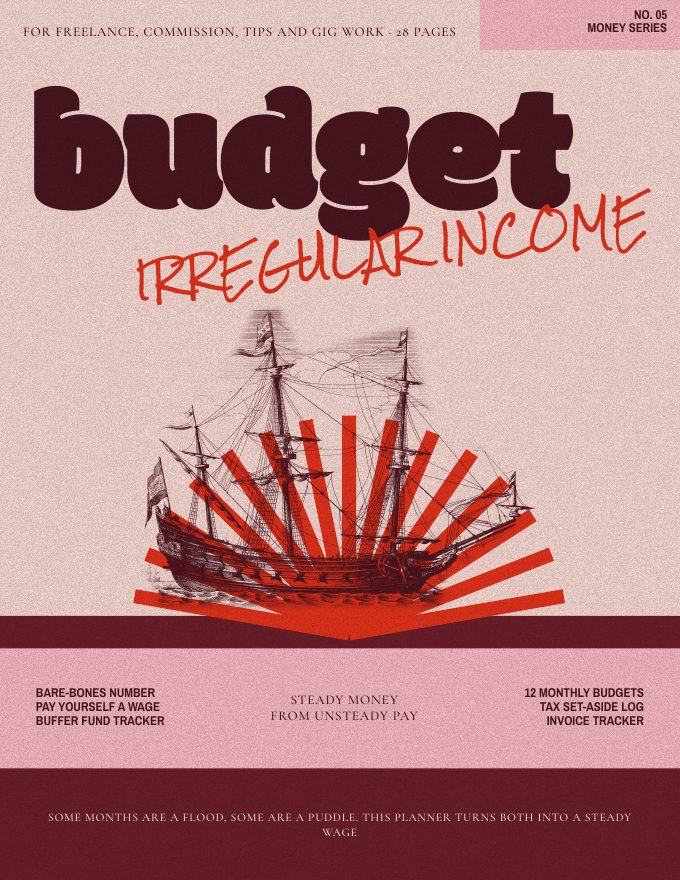
irregular income budget planner
28 printable pages that walk through this method: bare-bones number, wage, buffer tracker, tax set-aside log, 12 monthly budgets and an invoice tracker.
See the printable · $9This guide is general information, not personal financial or tax advice.