wedding budget breakdown
Every wedding budget goes wrong in the same place: couples start by choosing things, then add up the cost. It works far better the other way round. Set the number, split it, and then choose.
1. Set the number first
Add what you have saved, what you can save from each pay day before the wedding, and any contributions that have actually been confirmed. That total is your budget. Money that might turn up is not part of it.
2. Keep some back
Hold back around 5 to 10 percent for the things nobody plans for: an extra guest, alterations, a delivery fee, tips. If you do not need it, it becomes honeymoon money.
3. Split the rest by category
These ranges are a common starting point. Every wedding is different, so treat them as a first draft and adjust for what matters to you.
- Venue, food and drink: 40 to 50 percent
- Photography and video: 10 to 12 percent
- Outfits, hair and make-up: 8 to 10 percent
- Flowers and decor: 8 to 10 percent
- Music and entertainment: 5 to 10 percent
- Stationery, favours and gifts: 2 to 3 percent
- Rings: 2 to 3 percent
- Transport: 2 to 3 percent
- Ceremony and licence fees: 1 to 2 percent
4. Understand what guests cost
Venue, food and drink are charged per head, so the guest list is the biggest lever you have. Take your catering budget and divide it by the cost per person to see how many people you can afford. Cutting ten guests usually saves more than any amount of shopping around for flowers.
5. Pick your top three
Each of you chooses the three things you care about most. Spend properly on those and go simple on everything else. A couple who love food and photos can happily skip favours, a videographer and a second outfit.
Where couples save the most
- A weekday, a morning or an off-season date
- Fewer guests
- A venue that lets you bring your own drinks
- Seasonal, local flowers and more greenery
- A smaller display cake plus a sheet cake to serve
- Digital invitations
- A playlist for part of the evening
- Borrowed or second-hand decor
6. Track payments, not just prices
Most suppliers want a deposit and a final payment on different dates. Keep one list of every supplier with the total, the deposit paid, the balance and the date it is due, so no payment arrives as a surprise in the final month.
One question worth asking every supplier
"What would you do if this were your budget?" They know where the padding is, and most will tell you.
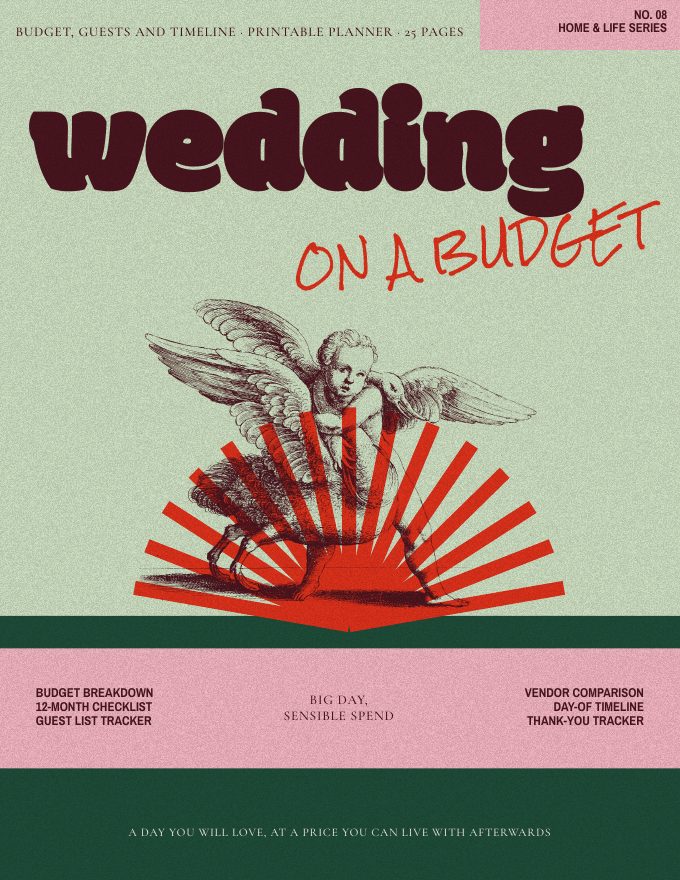
wedding planner on a budget
25 printable pages: set the number, budget breakdown, a two-part checklist, guest list maths, vendor comparison, payments tracker and a day-of timeline.
See the printable · $12